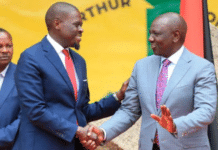
Former Deputy President Rigathi Gachagua has hit a legal dead end in his quest to challenge the swearing-in of Kithure Kindiki as his successor, after the High Court firmly declined to nullify the transition.
In a ruling delivered on Thursday, July 31, a three-judge bench led by Justice Anthony Mrima held that Gachagua’s application was moot and had been overtaken by developments that included an earlier Court of Appeal decision and a High Court ruling affirming the legitimacy of Kindiki’s assumption of office.
“The issues raised in these applications have been overtaken by events,” Justice Mrima stated on behalf of the bench.
In a separate plea, Gachagua had also sought the disqualification of Justices Mrima, Fridah Mugambi, and Eric Ogolla from hearing his impeachment case, citing alleged bias, conflict of interest, and abuse of power. However, the court rejected that request, citing insufficient evidence to support the accusations.
“The allegations of bias and misconduct are unsubstantiated. The judiciary cannot act on mere suspicion or personal dissatisfaction,” the judges ruled.
The court also clarified that decisions on judicial appointments and bench composition rest solely with the Chief Justice, as outlined in Article 165 of the Constitution. Gachagua’s attempt to challenge the composition of the bench was therefore deemed inappropriate and lacking in merit.
The former deputy president, who was ousted from office following a turbulent political fallout, accused the current administration of orchestrating his removal and has since demanded full compensation for what he termed as an “unlawful termination” of his term.
But the court remained firm, warning that referring the matter back to Chief Justice Martha Koome without justifiable grounds would set a dangerous precedent that could invite interference in judicial processes.
The ruling paves the way for the formal hearing of the impeachment petition, which the current bench will continue to handle as originally appointed by CJ Koome. Gachagua now faces the reality of pursuing his political and legal battles without the backing of the courts.