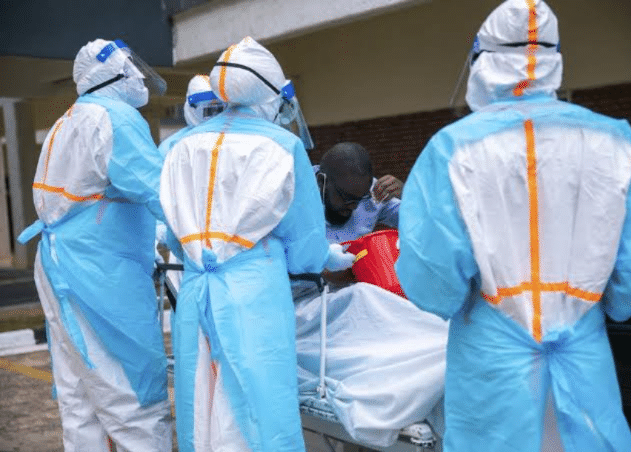
Uganda has introduced a mandatory 21-day quarantine for its citizens returning from the Democratic Republic of Congo (DR Congo) as authorities step up measures to prevent the spread of Ebola across its borders.
In measures announced on Sunday, the Ministry of Health said travellers who had visited DR Congo would no longer be permitted to transit through Uganda, while returning Ugandans would be required to undergo quarantine at their own expense.
The ministry also announced enhanced screening at Entebbe International Airport, land border crossings and designated road checkpoints to identify potential Ebola infections.
Uganda’s Health Minister Chris Baryomunsi told the BBC’s Newsday programme that only essential travellers from DR Congo would be allowed into the country, subject to strict public health measures.
“All these are measures to ensure that we keep Uganda free of Ebola,” he said.
The new restrictions follow concerns over two people who tested positive for Ebola in Kenya and Nigeria after travelling through Uganda. Despite the cases, Ugandan authorities have repeatedly maintained that no infections have been recorded within the country’s borders.
On Sunday, the Ministry of Health also confirmed that all 60 people who had been monitored after contact with the Ebola patient in Kenya had completed their monitoring and been discharged.
According to the Africa Centres for Disease Control and Prevention, the patient in Nigeria was a Ugandan-born woman married to a Swiss diplomat who had travelled to Kampala for a holiday. The Kenyan patient was a businessman who had travelled from DR Congo, where he had business interests.
Uganda’s Health Ministry Permanent Secretary Diana Atwine said CCTV footage showed that the two patients had no physical interaction with each other.
The developments have heightened regional concerns as DR Congo continues to battle a deadly Ebola outbreak that has reportedly claimed more than 4,800 lives since May, making it the country’s deadliest recorded outbreak of the disease. The outbreak has also spread to several other countries.
Uganda previously recorded 20 Ebola cases during the outbreak’s early stages, resulting in two deaths. The World Health Organization declared the country free of the disease in August.
Meanwhile, Kenya has reported additional infections following the death of the businessman two days after his arrival in Nairobi. Authorities have since confirmed eight more Ebola cases, while a second woman related to the businessman died over the weekend.
Uganda’s latest measures are aimed at strengthening border surveillance and reducing the risk of further transmission as neighbouring countries continue responding to the outbreak.