Robots are increasingly taking on roles traditionally performed by human service workers, from mixing cocktails to serving meals and preparing coffee. But as automation spreads, a new question is emerging: should customers be expected to tip a machine?
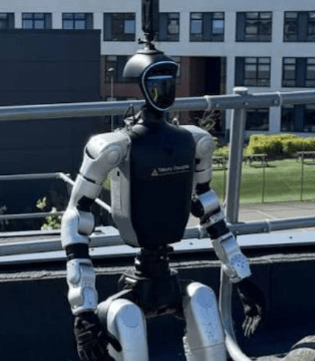
At The Tipsy Robot, a bar at Las Vegas’s Venetian Hotel, robotic arms prepare cocktails for customers. After selecting a margarita on a digital screen, the machines mix tequila, lime and triple sec before presenting the drink.
The novelty, however, comes with an unexpected extra. A $17 cocktail was accompanied by a 10% service fee and a request for a tip.
Similar experiences are becoming more common. At Artly Coffee in New York, a robotic barista prompted customers to leave a gratuity, while an automated kiosk at Newark Liberty International Airport suggested a tip when purchasing a bottle of water. At Top Burmese in Portland, Oregon, customers place their orders with human staff but have their meals delivered by a robot.
The growing use of automated tipping prompts has left consumers questioning where the money goes and who is actually providing the service.
While tipping a human waiter may feel straightforward, tipping a machine creates uncertainty. Some customers may wonder whether their money reaches the employees working behind the scenes or ends up with the company operating the technology.
Representatives from The Tipsy Robot and Artly Coffee say their human employees receive the tips and that the companies do not take a share. Artly has since removed its digital tip prompts following customer complaints.
But experts warn that the wider trend could create opportunities for businesses to benefit from gratuities intended for workers.
Holona Ochs, a political science professor at Lehigh University and co-author of Gratuity, says there is currently no clear legal standard determining who owns tips directed at robots.
She argues that the central issue is determining who benefits from the money and who ultimately bears the cost.
A New Twist to America’s Tipping Culture
The debate comes as tipping has expanded to more businesses, particularly since the pandemic and the widespread adoption of digital payment systems.
Customers are increasingly confronted with suggested gratuities, sometimes at businesses where tipping was not traditionally expected. Critics have described the trend as creating pressure on consumers to leave increasingly larger tips.
In the US, the issue is particularly significant because tipped workers can legally receive a lower minimum wage. The federal minimum wage is $7.25 an hour, while the federal cash wage for tipped employees can be as low as $2.13.
Under US law, employers, owners and supervisors generally cannot take employees’ tips. However, questions remain over how those rules apply when the tip is directed toward an automated machine rather than directly to a worker.
Ochs says the lack of clear regulations surrounding robot-generated tips could make it difficult to determine whether workers are receiving the money.
She also argues that employees may be reluctant to raise concerns about tip practices because of possible retaliation, making it difficult to establish how widespread the problem may be.
Still, automation does not necessarily mean fewer opportunities for workers.
At establishments such as The Tipsy Robot and Artly Coffee, the robots themselves are part of the attraction, meaning the human employees working alongside them could be performing roles that might not otherwise exist.
Artly says its decision to remove tip prompts and increase employee pay was partly influenced by customer concerns. Some locations have since introduced physical tip jars, with the company maintaining that all tips go to human staff.
“We don’t believe in automating for cost savings at the expense of humans,” said Abigail Smathers, Artly’s director of content.
As robots become more common in restaurants, hotels, airports and other service businesses, consumers may increasingly have to decide whether tipping should follow the machine or remain reserved for the people working behind it.