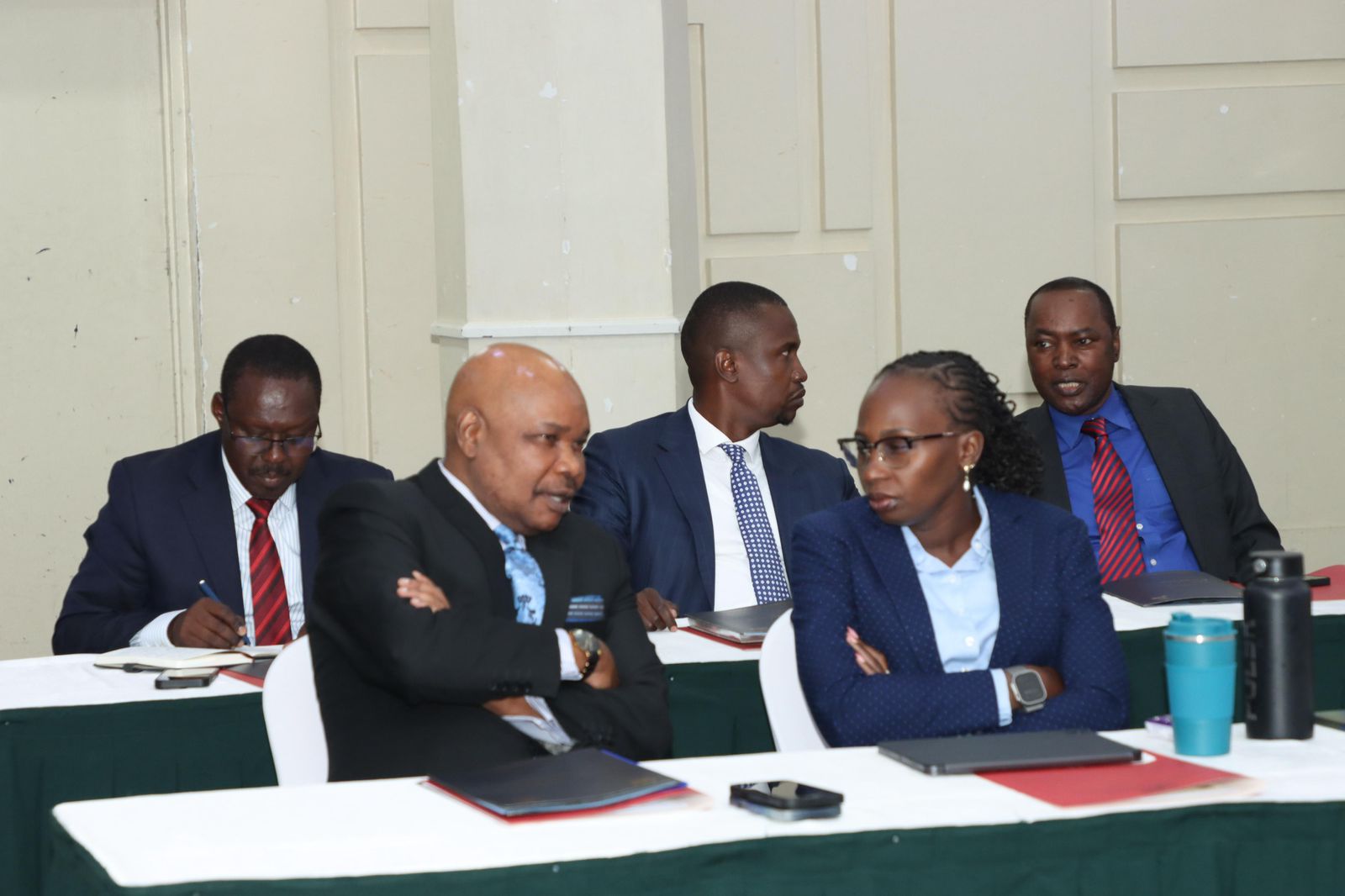
The government’s newly constituted Panel of Experts on Compensation of Victims of Police Brutality has begun a week-long retreat at the Kenya School of Government, but its very existence continues to stir fierce debate over legality, morality, and credibility.
The panel, chaired by Prof. Makau Mutua and deputised by Law Society of Kenya (LSK) president Faith Odhiambo, has become a lightning rod for controversy since its unveiling. Critics within the legal fraternity insist the body has no constitutional grounding, warning that it risks undermining independent offices already mandated to handle matters of accountability, such as the Director of Public Prosecutions (DPP), Inspector General of Police, and the Kenya National Commission on Human Rights (KNCHR).
For Odhiambo, however, the storm is worth weathering. Accused by some of betraying the cause of justice, she has pushed back firmly, insisting that her place at the table is guided by duty to victims who have for years waited in vain for redress.
“As I take up this responsibility, let it be known that I have in no way betrayed your trust,” she said at her swearing-in. “The panel bears both the duty and opportunity to spearhead a revolutionary shift in victim reparations. Never again shall Kenyans be killed by trigger-hungry officers for exercising their constitutional rights.”
The panel itself has sought to demystify its mandate, rejecting suggestions that it is a quasi-constitutional body. In a statement, it described itself as an “ad hoc presidential advisory panel” created under Article 132(4)(a) of the Constitution, which grants the President power to direct and coordinate government functions and appoint advisors. Its members, it argued, are not “public officers” as defined in Article 260 and therefore are not subject to Public Service Commission recruitment.
But the legal debate is only half the battle. The initiative faces a moral paradox that critics have not shied away from pointing out: how can a State accused of ordering or condoning killings, abductions, and injuries now turn around to pay compensation? For many, this raises questions about sincerity and accountability.
The panel counters that its role is not to replace oversight bodies, but to bridge the gap between constitutional mandates and lived grievances that remain unaddressed. “The work of the task force is advisory and supplementary intended to connect unresolved pain with mechanisms of justice,” the communique stated.
Still, the question lingers: can a government-backed panel deliver justice to victims of a system in which the government itself stands accused? For now, the task force presses on, carrying both the weight of expectation and the burden of skepticism.