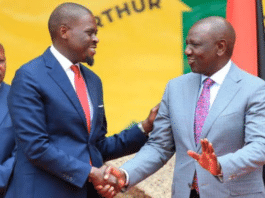
The Ethics and Anti-Corruption Commission (EACC) has thrown its weight behind the Presidential Multi-Agency Team on the War Against Corruption (MAT-WAC), insisting that the framework is legally sound and consistent with Kenya’s constitutional order.
In a replying affidavit filed at the High Court, David Too, the EACC Director of Legal Services and Asset Recovery, said the commission supports the initiative on condition that its independence remains intact.
“The EACC is established under Article 79 of the Constitution and the EACC Act, 2011 with a clear mandate to combat corruption, economic crimes, and unethical conduct. Independence, however, does not mean isolation,” Too argued.
He noted that collaboration with other State agencies is critical in a fight that demands “all hands on deck,” adding that MAT-WAC provides a platform for intelligence sharing, joint investigations, asset recovery, and stronger prosecutions.
The affidavit further explained that President William Ruto’s proclamation of August 18, 2025 created the taskforce to consolidate efforts from 11 key institutions, among them the Office of the President, the Attorney General, National Intelligence Service, Directorate of Criminal Investigations, Office of the Director of Public Prosecutions, Central Bank of Kenya, Kenya Revenue Authority, Asset Recovery Agency, Financial Reporting Centre, and the Public Procurement Regulatory Authority.
According to EACC, MAT-WAC’s mandate goes beyond investigations, extending to engaging the private sector, mobilizing resources, sharing best practices, and shaping communication strategies to demonstrate progress in the anti-graft campaign.
The affidavit was filed in response to a petition lodged by Dr. Magare Gikenyi and others, who are challenging the legality of the presidential directive establishing MAT-WAC. The petitioners argue that the taskforce risks undermining the autonomy of independent offices.
EACC dismissed those concerns, insisting that the framework does not strip the commission of its independence as guaranteed under Article 249(2) of the Constitution, which insulates it from external control.
“The Commission is, in principle, in favour of the MAT-WAC framework, provided its independence is safeguarded,” Too said, urging the court to throw out the petition and allow the team to continue its work.