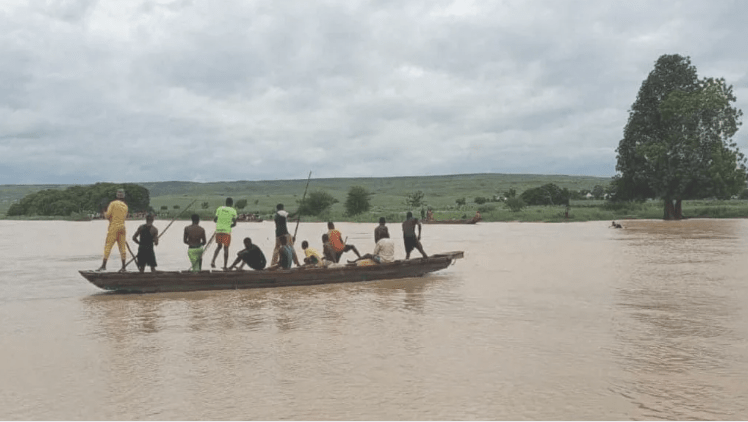
At least 32 people have been confirmed dead after a passenger boat capsized on the River Niger in Nigeria’s northern state of Niger, authorities said on Thursday.
The vessel, which was reportedly overloaded with about 100 people on board including women and children struck a submerged tree stump and overturned in the Borgu area on Wednesday morning.
Officials from the National Emergency Management Agency (NEMA) said more than 50 passengers were rescued, while at least eight others remain missing as search and recovery efforts continue.
“We have set up water marshals to prevent overloading and to ensure life jackets are used. Unfortunately, it seems they were not on duty when this boat left,” NEMA spokesman Abdullahi Baba Ara told BBC Hausa.
Local leaders described a devastating scene. Sa’adu Inuwa Muhammad, a district head who rushed to the site, told Reuters that he had personally witnessed the recovery of bodies. “The boat carried more than 100 people. By the time I left, 31 corpses had been pulled out of the water,” he said.
Boat accidents are a recurring tragedy in Nigeria, often linked to poor regulation, unsafe practices, and weak enforcement of safety laws. In December last year, more than 50 bodies were recovered after a similar disaster on the River Niger, while just last month, 25 passengers went missing in Sokoto state.
Despite government directives requiring all water travellers to wear life jackets, compliance remains low. Authorities have in recent months launched awareness campaigns, including the “No Life Jacket, No Travel” policy and restrictions on night-time boat operations. In May, the Ministry of Marine and Blue Economy announced plans to distribute 42,000 life jackets across 12 riverine states.
For residents of Niger state Nigeria’s largest by land mass river travel remains an essential, often cheaper, mode of transportation. But with yet another deadly accident, questions over enforcement and passenger safety are once again at the centre of national debate.